CONCEPT EXPLORATION
Editorial post
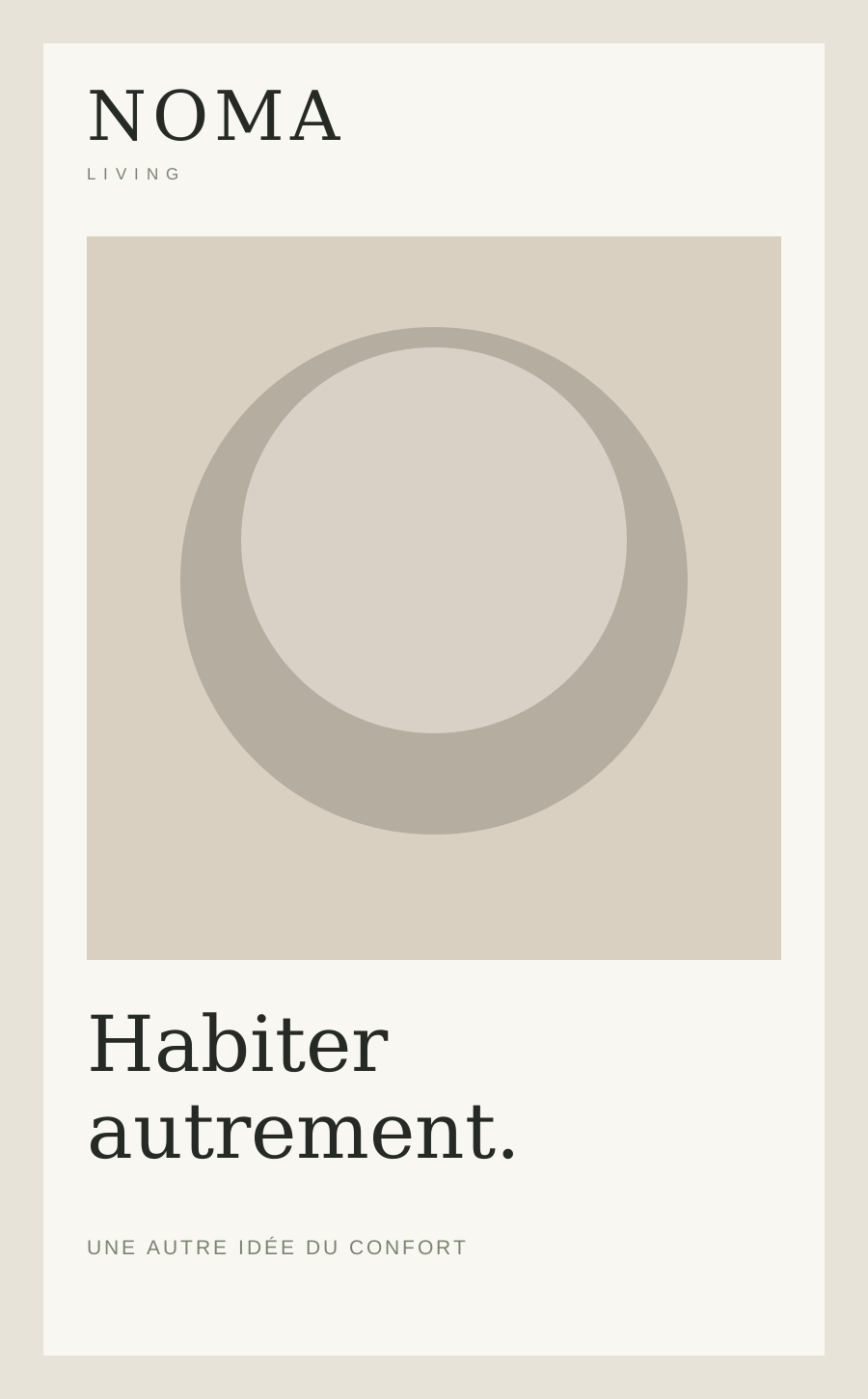
An example post that could be adapted for social channels.
E-COMMERCE / FURNITURE & SEO
Imagining a furniture and homeware shop where objects are not lost among promotions: a restrained editorial world, useful product pages and a clear shopping journey.

A brand system designed for e-commerce: identity, catalogue, product pages, packaging, email and SEO structure. The challenge is to build a system that works across very different formats without losing its character.
E-commerce · furniture & SEO.
Brand guidelines, print materials, website concept and editorial content.
An independent design exploration, with no real client and no published campaign.
#f2eee5#262a25#778371#a2765cNoma Living explores furniture through its uses and materials. The reference image gives light, textiles and the space between objects a central role, helping create a browsing experience that feels more editorial and less overtly commercial.
The photographed interiors are real places, with no connection to an existing Noma Living brand or to the products imagined here. The photographs are references only and must always retain that context.
A real photograph of a contemporary living room, used as a reference.The wordmark combines serif typography with more technical spacing in the word LIVING. The palette favours off-white, sage and wood tones over decorative excess. The mark works on a web page as naturally as on a label.
Restraint does not mean anonymity: consistent proportions, heading composition and credible imagery make the system recognisable from one format to the next.
Wordmark and brand palette.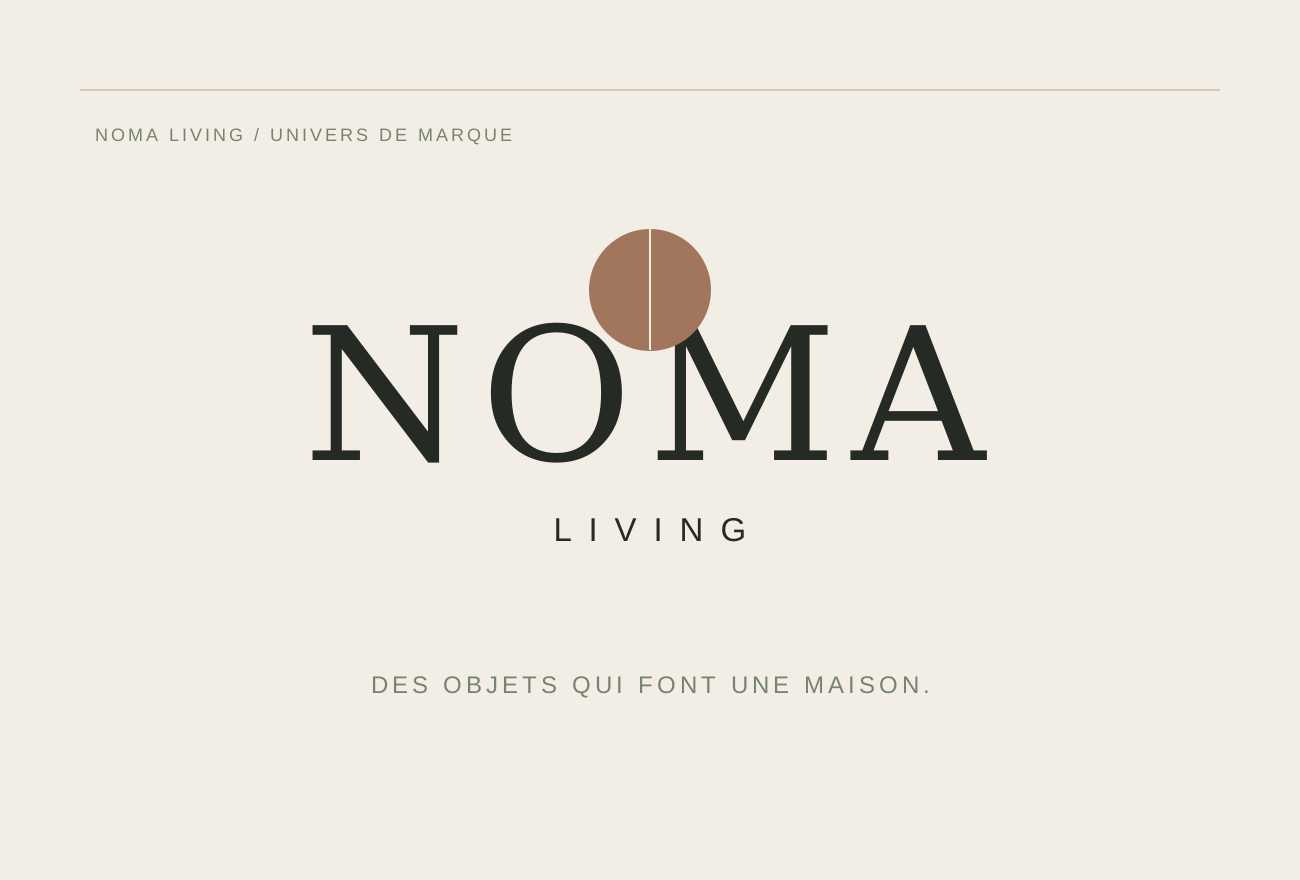
The page for an imagined armchair, SOLIS, is structured around shoppers’ questions: dimensions, materials, care and packaging. Undefined information is marked as “to be confirmed” rather than filled with invented figures.
This reflects the reality of e-commerce SEO: appeal and precision need to work together. The descriptions demonstrate an editorial structure, not certified specifications for a product on sale.
SOLIS editorial product page; the product is entirely fictional.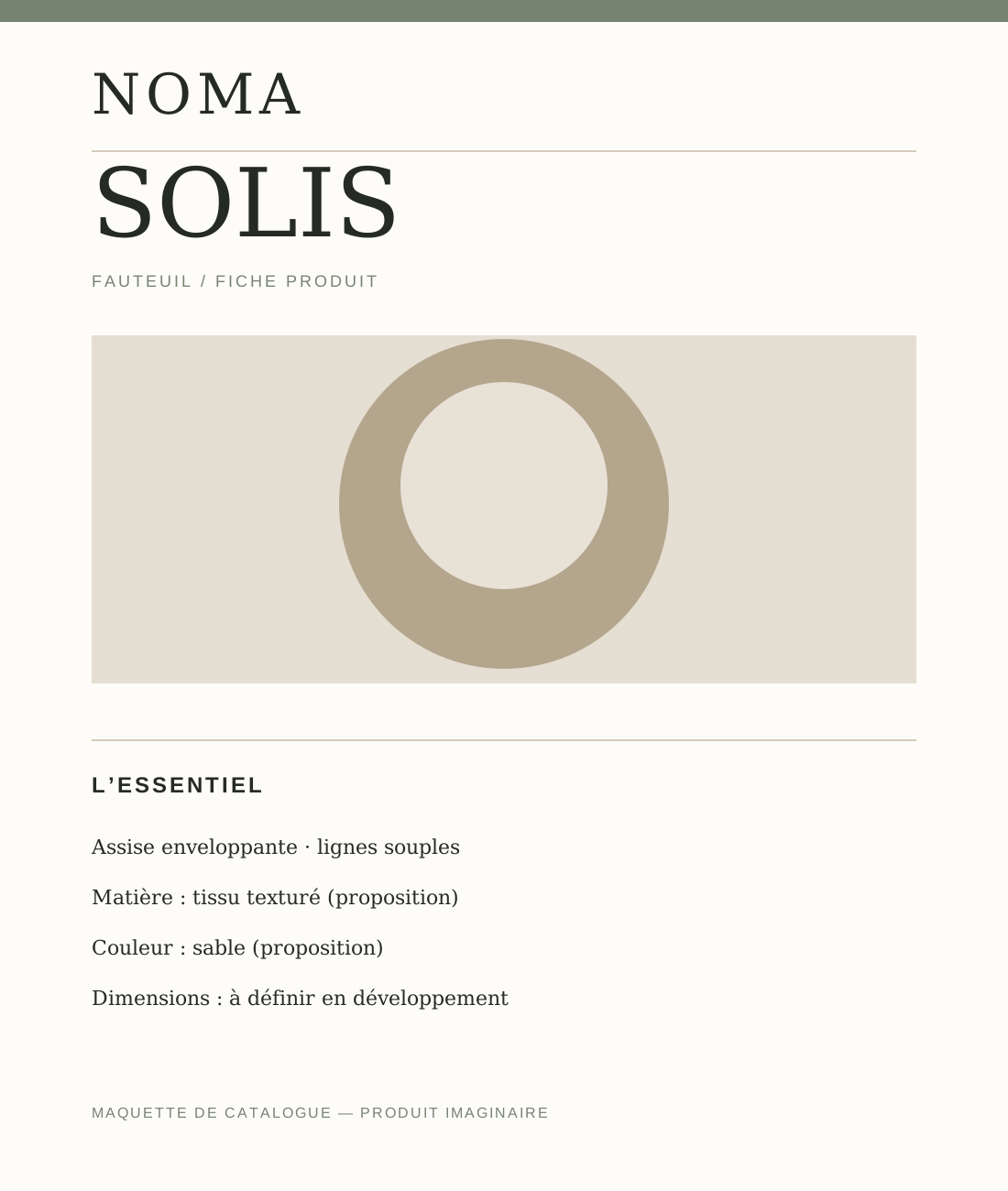
The e-commerce page mock-up gives the product and useful information equal prominence. The image conveys a sense of the material, while service and delivery information should stay easy to find without endless browsing.
This HTML/CSS demonstration has no working basket, payments or stock. The visible button is only an interface element. A real implementation would require an e-commerce platform and verified data.
HTML mock-up: product page, navigation and reassurance information.
SOLIS · fauteuil conceptuel
Matières et dimensions à définir. Aucun stock ni prix réel.
DÉCOUVRIR L’ÉTUDE ↗A product label can communicate the essentials: name, type of object, material and instructions, once verified. The SOLIS concept shows how to organise that information within a small reading area.
The deliverable is a design simulation. It cannot be used as a regulatory product label as it stands: real specifications, traceability and manufacturer details still need to be added.
Product label and information hierarchy exploration.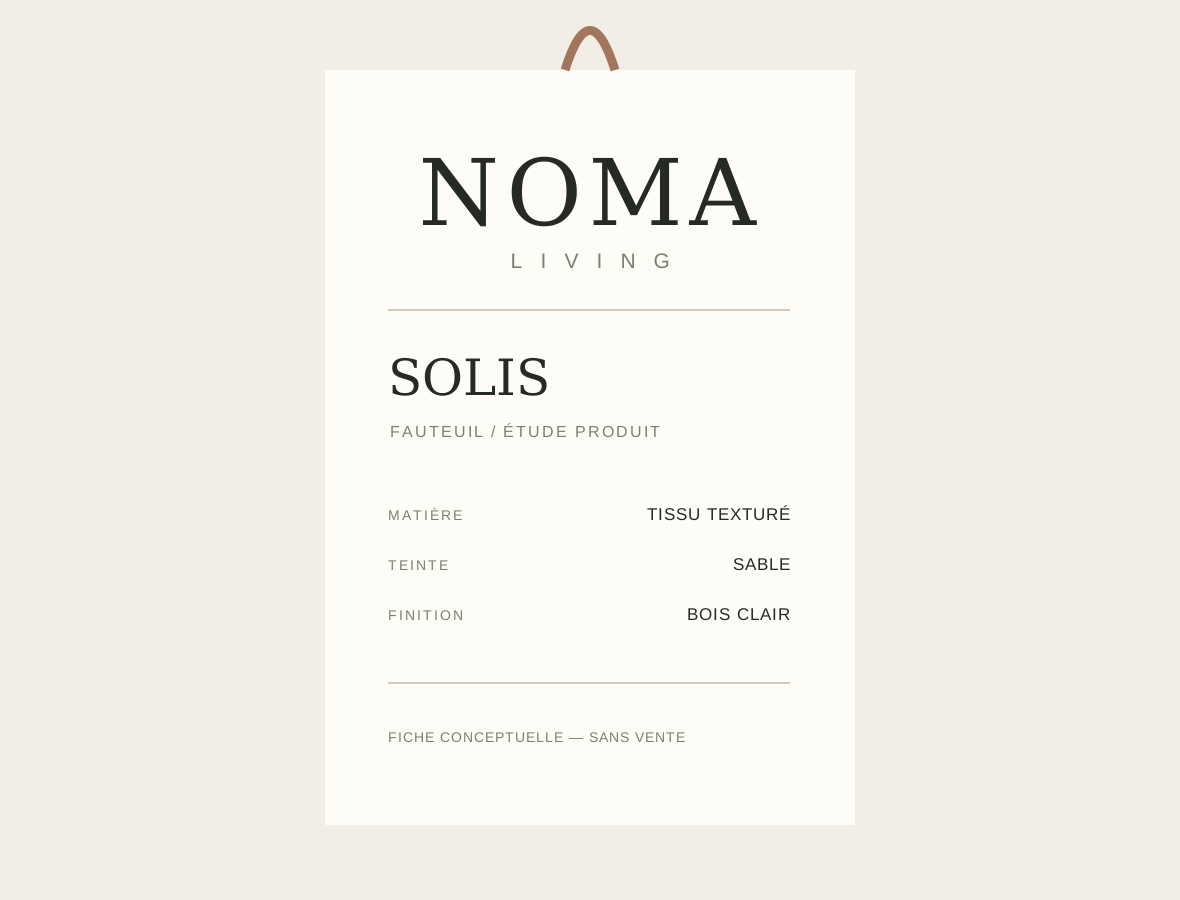
The packaging proposal uses a natural-looking material, generous open space and a central signature. The unboxing experience is conceived as an extension of the website: consistent, considered and easy to recognise.
These forms are illustrative: there is no Noma manufacturer and no parcels have been shipped as part of this project. Technical and environmental packaging requirements would need to be assessed at the production stage.
Box concept with label and branding.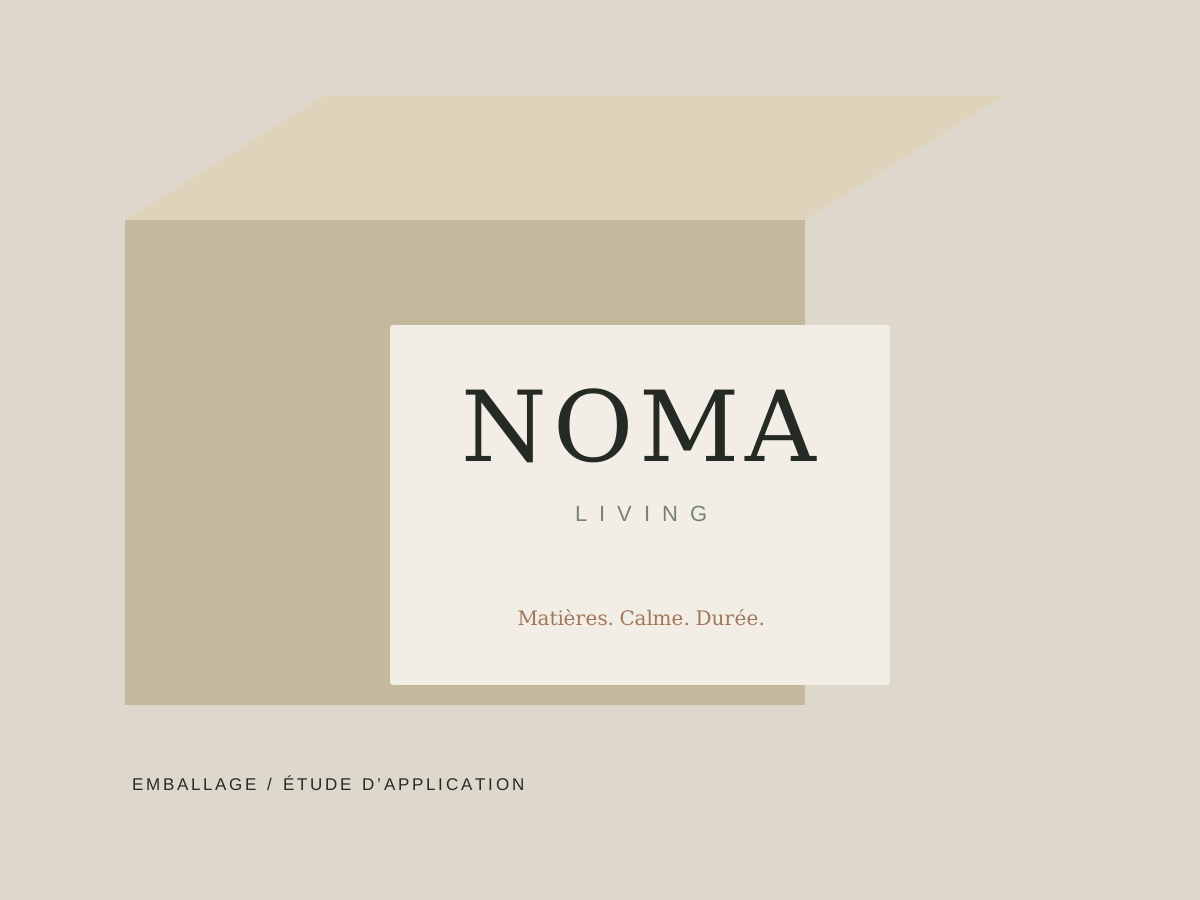
The concept email focuses on one message and a clear structure. It gives the identity room to breathe rather than combining crossed-out prices, urgency messages and artificial offers. The design could introduce a new collection or seasonal inspiration.
No campaign has been sent and no results have been measured. The piece demonstrates a visual design approach for a future customer journey.
Concept newsletter, not sent.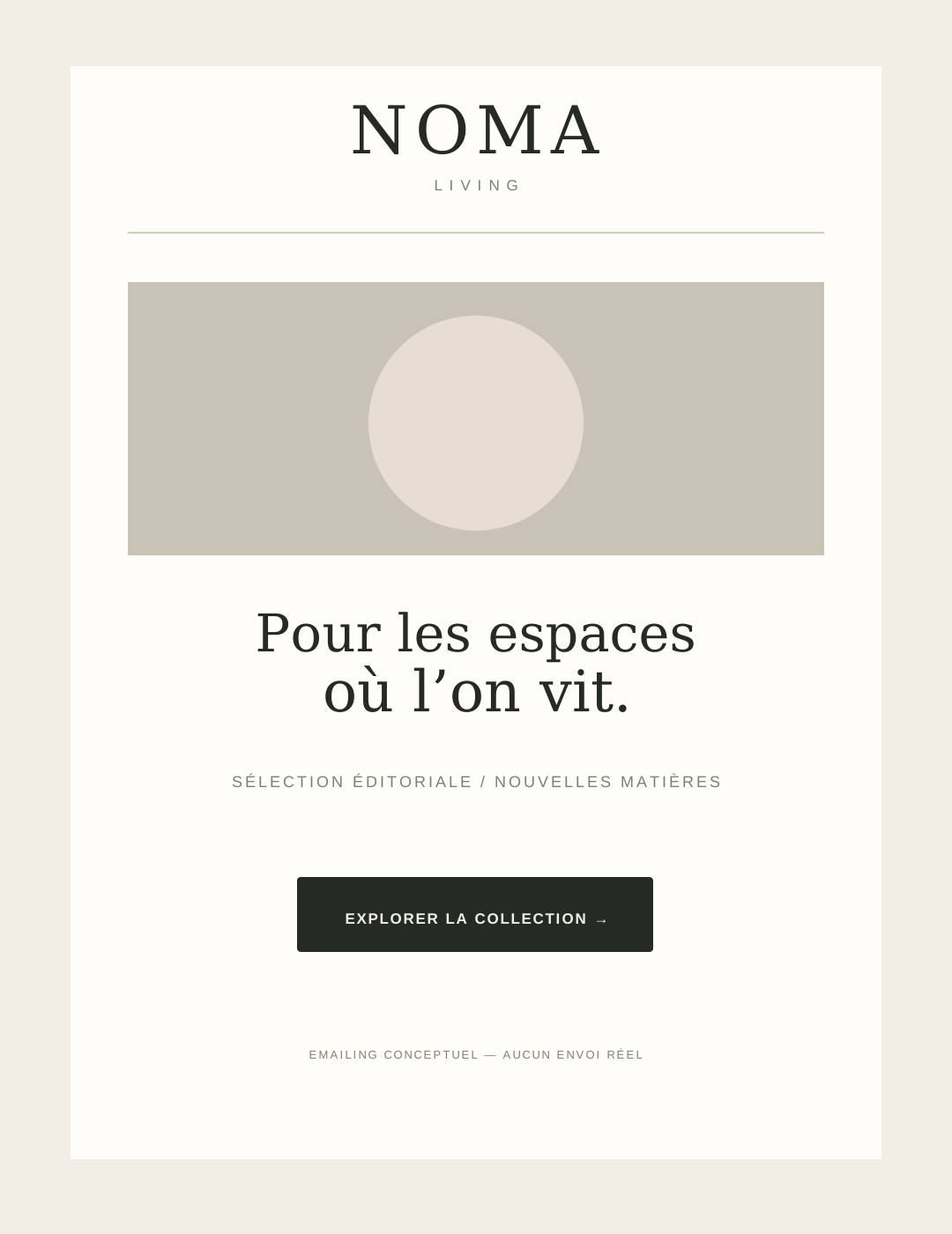
Effective product pages should first answer what people are searching for. The final design illustrates an editorial structure: a descriptive H1 heading, introduction, materials, dimensions, frequently asked questions and metadata.
No Google rankings, search volumes or conversion rates have been invented. The project demonstrates a method, not results attributed to a shop that does not exist.
SEO content framework without invented metrics.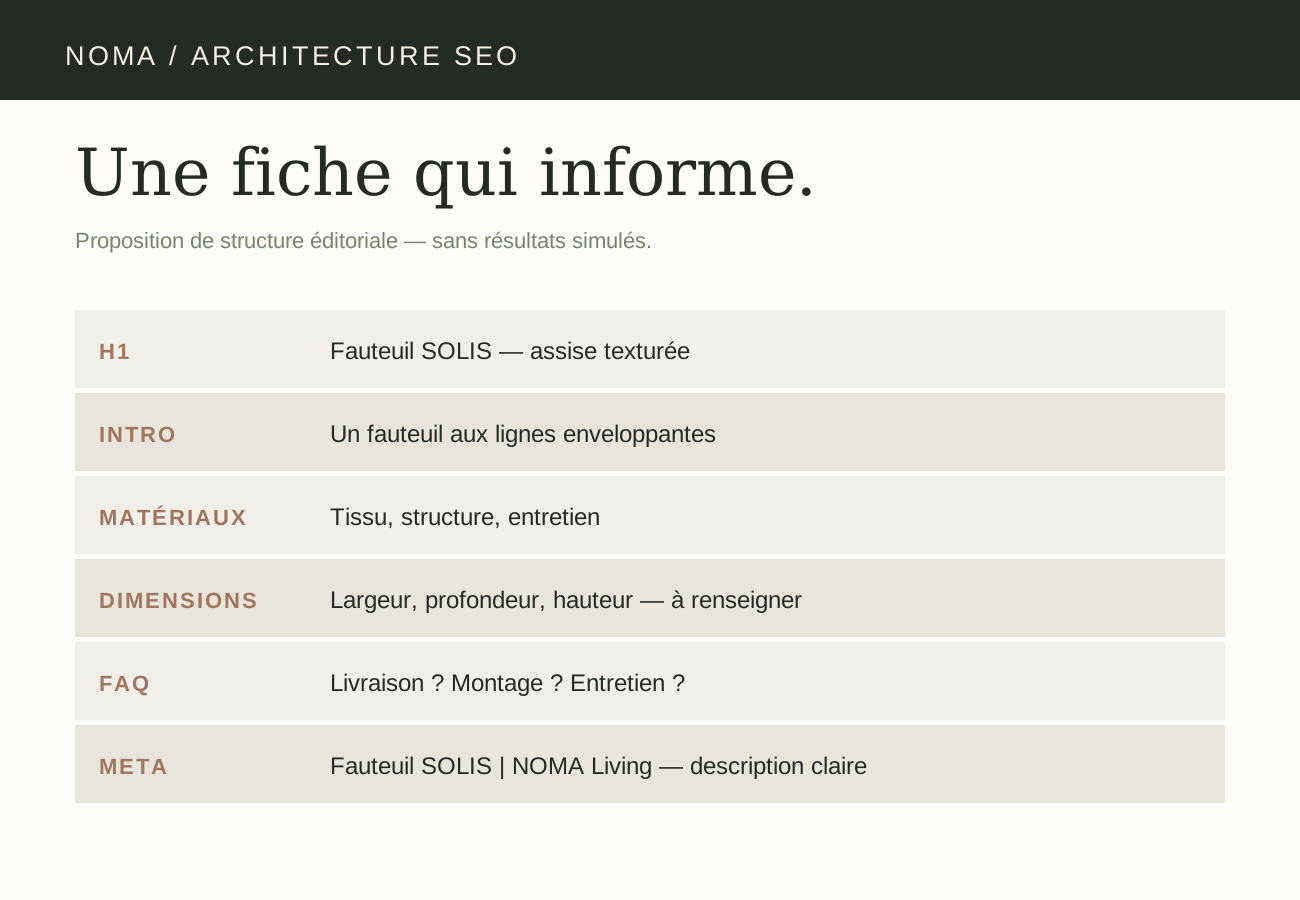
An example post that could be adapted for social channels.

A real photograph of an armchair that is not sold by Noma.
A simulated tag and product information.
This study presents an art direction imagined for Noma Living. The materials are original prototypes; no client relationship, published campaign or commercial performance is claimed.